In this article
- What Does It Mean When a Child Feels Everything Deeply?
- Why Some Children React More Strongly Than Others
- Don’t Dismiss Their Feelings
- Help Your Child Name What They’re Feeling
- What Your Child Needs During a Big Emotional Moment
- Create a Calm Space at Home
- Don’t Protect Them From Every Disappointment
- Prepare Your Child for Changes and Transitions
- Give Sensitive Children Small Choices
- Don’t Confuse Sensitivity With Bad Behavior
- Make Room for Play, Rest and Connection
- Avoid Labeling Your Child as “Too Sensitive”
- When Big Feelings May Need Extra Support
- Your Child Doesn’t Need to Feel Less
- Frequently Asked Questions
- Final Thoughts
Some children seem to experience every emotion a little more intensely.
They may cry when plans change, become deeply upset after a disagreement with a friend, worry about making mistakes, or feel completely overwhelmed by a busy environment. On the other hand, these same children may experience happiness, excitement, affection and empathy just as strongly.
If your child reacts more intensely than their siblings or classmates, it can be tempting to think they are being overly dramatic or difficult. But children have different temperaments, and some are naturally more sensitive to changes in their surroundings, emotions and experiences. The American Academy of Pediatrics describes temperament as part of a child’s individual emotional style and ability to adapt to situations.
That doesn’t mean every strong emotional reaction should simply be accepted without guidance. Children still need boundaries and opportunities to learn emotional regulation.
What they often need most is an adult who can help them understand what they are feeling, why it feels so big, and what they can do next.
What Does It Mean When a Child Feels Everything Deeply?
A child who feels things deeply may react strongly to experiences that seem relatively small to an adult.
Losing a game might lead to tears. A favorite teacher being absent might completely change their mood. A last-minute change to the day’s plans could cause frustration. Even a seemingly harmless comment from another child might stay on their mind for hours.
Some children are also highly aware of what is happening around them. They may notice a parent’s change in tone, pick up on tension between adults, or become uncomfortable in loud or crowded environments.
These differences can be related to temperament. Children vary in how easily they adapt to new situations and how intensely they respond to changes, stimulation and emotions.
Importantly, being sensitive isn’t the same as being weak.
A child who feels deeply may also be highly empathetic, thoughtful, observant, imaginative or passionate. The challenge is helping them develop the skills to handle those intense emotions without feeling controlled by them.

Why Some Children React More Strongly Than Others
There isn’t one explanation for why a child may experience emotions more intensely.
Temperament plays a role. Some children naturally adapt quickly to unfamiliar people, places and routines. Others need more time to feel comfortable.
A child’s experiences can also affect emotional responses. Changes at home, friendship problems, school pressure, lack of sleep or stressful situations can make it harder for any child to manage strong emotions.
Age matters too.
Young children are still learning how to identify feelings, control impulses and recover from disappointment. They cannot be expected to respond to frustration in exactly the same way an adult would.
As children grow, self-regulation becomes a skill they gradually develop. When children struggle with emotional regulation, parents can help by slowing situations down, modeling calm behavior and giving them manageable steps rather than expecting instant control.
This is why a child who is crying intensely may not need a lecture in that moment.
They may first need help feeling safe enough to calm down.
Don’t Dismiss Their Feelings
One of the easiest mistakes parents can make is trying to make a child’s emotion disappear immediately.
“Don’t cry.”
“It’s not a big deal.”
“You’re fine.”
“Why are you getting so upset?”
These phrases are usually said with good intentions. Parents want their children to feel better. But dismissing an emotion doesn’t teach a child how to handle it.
Instead, try acknowledging what you see.
“You’re really disappointed.”
“That change was unexpected, and it upset you.”
“I can see you’re having a hard time right now.”
“You really wanted that to work out.”
Research-informed parenting resources recommend helping children notice and name their emotions before jumping into problem-solving. Naming feelings can help children develop emotional awareness and coping skills.
- Validation doesn’t mean giving children whatever they want.
- You can acknowledge a child’s disappointment while still saying no.
- You can understand their anger while still setting a boundary.
- You can comfort them without removing every challenge from their life.
That balance is an important part of healthy parenting.
Help Your Child Name What They’re Feeling
Children often know they feel bad before they know exactly what emotion they are experiencing.
A child might say:
“I don’t know!”
“I hate this!”
“Leave me alone!”
But underneath those words could be disappointment, embarrassment, anxiety, frustration, jealousy or sadness.
Helping children build an emotional vocabulary gives them another way to communicate.
Instead of asking only, “What’s wrong?” try offering possibilities:
“Are you frustrated?”
“Did you feel left out?”
“Are you worried about what might happen?”
“Were you disappointed because you expected something different?”
You don’t have to guess correctly every time. The conversation itself teaches children that emotions can be examined rather than simply acted upon.
You can also use books and stories to practice.
Ask your child how a character might be feeling, what caused the emotion and what the character could do next.
This makes emotional learning feel natural rather than like a lecture.
For older children, a simple 1-to-10 scale can also help them communicate intensity. A child may be able to say, “I’m at an eight,” even when explaining the entire situation feels difficult.
What Your Child Needs During a Big Emotional Moment
When a child is completely overwhelmed, this is usually not the best time for a long explanation.
First, focus on safety and calm.
Lower your voice. Reduce unnecessary stimulation. Give your child some physical space if they need it. Stay nearby without forcing them to talk immediately.
Once the intensity decreases, you can discuss what happened.
This approach matters because emotional regulation is a skill children develop over time. They often learn it partly through co-regulation—experiencing a calm, supportive adult who models how difficult emotions can be handled.
Think of yourself as the emotional guide rather than the emotional referee.
You don’t have to “win” the moment.
Your job is to help your child get through it safely and learn something from it afterward.
Create a Calm Space at Home
Some children benefit from having a comfortable place where they can take a break when the world feels overwhelming.
It doesn’t need to be a special “time-out” area.
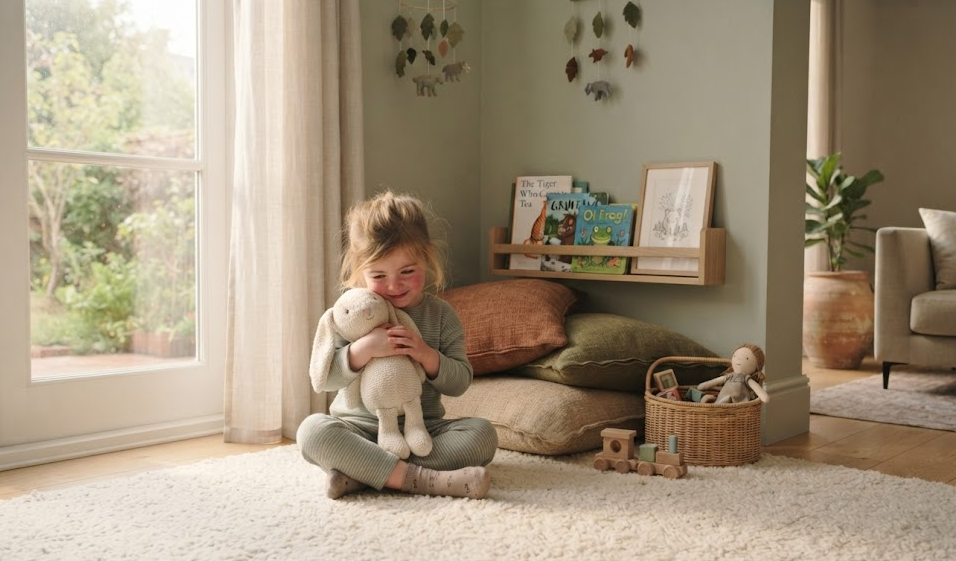
A cozy reading corner with a few books, cushions, a favorite stuffed animal and soft lighting can become a familiar place for quiet time.
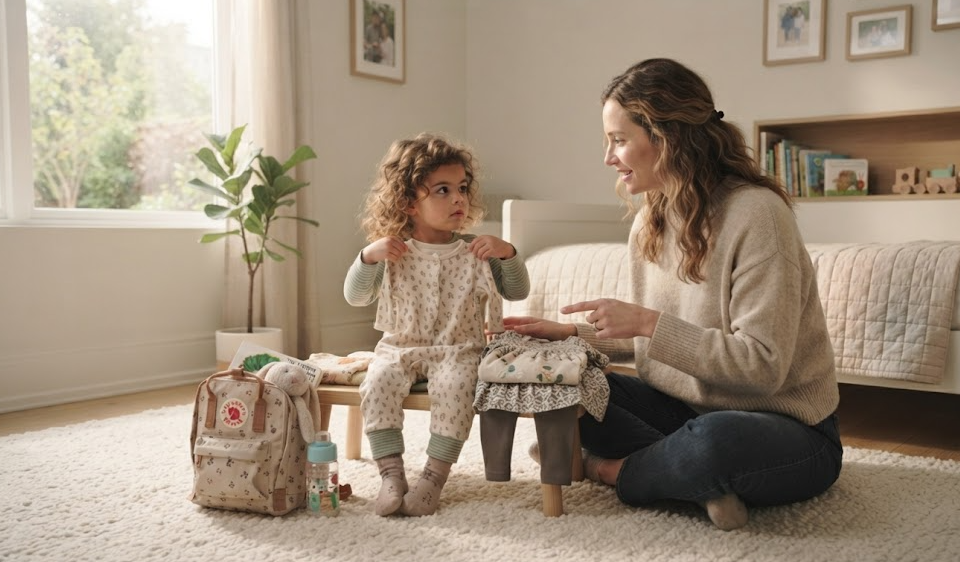
For younger children, familiar objects can provide comfort during stressful transitions. A favorite blanket, soft toy or comfortable piece of children’s clothing may become part of a child’s calming routine.
The important thing is how the space is presented.
It should feel like a place where the child can reset—not a place where they are being sent because their emotions are unacceptable.
Some children may also benefit from simple sensory activities, drawing, reading or quiet breathing exercises. The best strategy will depend on the child’s age and personality.
Don’t Protect Them From Every Disappointment
When you know your child feels everything intensely, you may want to prevent situations that could upset them.
But children also need opportunities to experience manageable disappointment.
They won’t always win the game.
A friend may not want to play.
A birthday party may not go exactly as planned.
Their favorite snack may be unavailable.
A school project might not turn out the way they imagined.
These moments are uncomfortable, but they can also become opportunities to practice coping.
Instead of immediately fixing the situation, stay supportive while giving your child room to participate in solving the problem.
For example:
“I know you’re really disappointed that your friend couldn’t come over. Would you like to tell me what happened?”
After your child has calmed down, you might discuss what they could do next.
The goal isn’t to make disappointment disappear.
It’s to help your child discover, “I can feel disappointed and still be okay.”
That lesson can become increasingly valuable as children grow.
Prepare Your Child for Changes and Transitions
Some children struggle when something happens differently from what they expected.
A simple warning can make transitions easier.
Instead of suddenly announcing, “We’re leaving the park now,” try:
“Five more minutes, then we’ll head home.”
Before a doctor’s appointment, school event or unfamiliar activity, explain what your child can expect.
If plans change, acknowledge the change rather than pretending it isn’t disappointing.
“I know we planned to go to the playground, but it’s raining today. You’re disappointed. Let’s figure out what we can do instead.”
Predictability doesn’t mean creating a rigid childhood.
It simply gives children a little more time to mentally prepare.
HealthyChildren.org also recommends preparing children for situations that may be stressful and adjusting expectations based on a child’s individual temperament.

Give Sensitive Children Small Choices
Children who feel deeply can sometimes benefit from having a sense of control over small, appropriate decisions.
That doesn’t mean letting them decide everything.
Offer two reasonable options:
“Would you like the striped shirt or the plain one?”
“Do you want to brush your teeth before or after your story?”
“Would you rather walk or ride your scooter?”
Small choices allow children to practice independence without placing adult-level responsibility on them.
This can be particularly useful during routines that frequently lead to arguments.
As children grow, parents can gradually increase responsibility.
Let them organize their backpack, choose a book, help prepare lunch or decide which toys to put away first.
The objective is to help children discover that they can handle small challenges and decisions.
Don’t Confuse Sensitivity With Bad Behavior
A child can have intense emotions and still need boundaries.
This is one of the most important distinctions for parents.
You can say:
“I understand you’re angry. It’s okay to be angry. It isn’t okay to hit.”
Or:
“You’re disappointed that we’re leaving. You can be upset, but you can’t throw the toys.”
This approach separates the emotion from the behavior.
The emotion is acknowledged.
The behavior still has a limit.
Children need both empathy and boundaries. Too much control can make children feel misunderstood, while a complete lack of limits doesn’t teach them how to function safely with other people.
The goal is not to eliminate difficult emotions.
It is to help children express them in increasingly healthy ways.
Make Room for Play, Rest and Connection
Children need time when they aren’t being asked to achieve something.
Free play, outdoor time, reading, drawing, building, pretend play and simple family activities can give children opportunities to decompress.
Not every activity needs to be educational.
Not every afternoon needs to be scheduled.
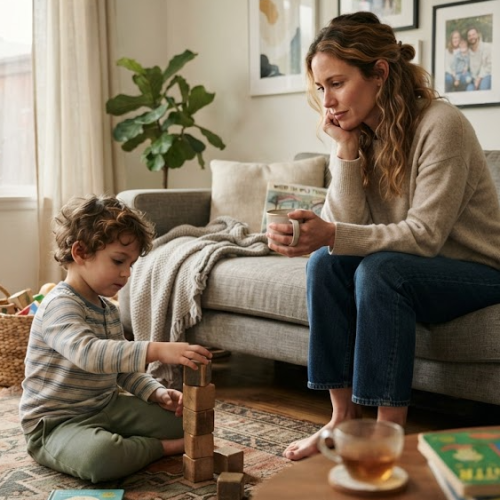
Sometimes sitting on the floor and building a block tower together is enough.
Sometimes reading the same bedtime story for the tenth time is enough.
And sometimes a child simply wants to sit beside a parent.
Regular moments of positive connection can strengthen the parent-child relationship and create opportunities for children to share what is happening in their lives. Child Mind Institute resources also emphasize the value of setting aside regular, nonjudgmental time to connect with children.
Avoid Labeling Your Child as “Too Sensitive”
Labels can become part of the way children see themselves.
If a child repeatedly hears, “You’re too sensitive,” they may begin to believe that their emotional reactions make them difficult or flawed.
Instead, describe what you observe without turning it into a negative identity.
“You notice a lot of things.”
“You care deeply about your friends.”
“Changes can feel difficult for you.”
“You have really strong feelings.”
Then add a skill:
“Let’s figure out what helps when those feelings get too big.”
This approach communicates that sensitivity is part of who they are, while emotional regulation is something they can learn.
The American Academy of Pediatrics notes that understanding a child’s temperament can help parents respond more patiently and choose strategies that fit the child’s individual needs.
When Big Feelings May Need Extra Support
Strong emotions are a normal part of childhood. However, parents should pay closer attention when emotional difficulties become persistent or significantly interfere with everyday life.
For example, consider talking with your child’s pediatrician or an appropriately qualified mental health professional if emotional reactions consistently interfere with school, friendships, sleep, family life or normal activities.
You don’t need to diagnose your child yourself.
Professional support can help determine whether you’re seeing a temperament difference, a temporary response to stress or something that deserves additional attention.
It’s also important not to assume that every highly sensitive child has an anxiety disorder, ADHD or another mental health condition. Strong emotions alone don’t establish a diagnosis.
At the same time, persistent or severe difficulties shouldn’t simply be dismissed as “that’s just how they are.”
The American Academy of Pediatrics recommends paying attention to children’s mental and emotional development as part of overall health rather than waiting only for a crisis.

Your Child Doesn’t Need to Feel Less
Perhaps the most important thing to remember is that the goal isn’t to make a sensitive child stop feeling so much.
They need to learn what to do with those feelings.
A child who learns to recognize disappointment can eventually learn to recover from it.
A child who learns to name anxiety can eventually learn to ask for support.
A child who learns that anger is allowed—but hitting isn’t—can gradually develop better ways to express frustration.
A child who knows that a trusted adult will listen is more likely to feel comfortable talking about difficult experiences.
Emotional regulation isn’t something children master overnight. It develops through practice, maturity, supportive relationships and repeated opportunities to handle manageable challenges.
Parents don’t need to respond perfectly every time.
You will lose patience sometimes.
Your child will have difficult days.
Plans will go wrong.
That’s normal family life.
What matters is the overall environment you create: one where emotions can be talked about, boundaries are clear, mistakes can be repaired and children know they are loved even when they’re struggling.
Frequently Asked Questions
Why does my child feel emotions so intensely?
Children have different temperaments and emotional styles. Some naturally react more strongly to changes, stimulation, disappointment or social situations. Their experiences and developmental stage can also affect how they respond.
Is being a sensitive child a bad thing?
No. Sensitivity isn’t automatically a weakness. Children who feel deeply may also be empathetic, observant, caring and creative. They may simply need extra support learning how to manage intense emotions.
What should I say when my child is overwhelmed?
Start by acknowledging the emotion rather than immediately trying to fix the situation. You might say, “I can see you’re really upset. I’m here with you.” Once your child is calmer, you can talk about what happened and what to do next.
Should I let my child cry?
Crying is a normal emotional response. Instead of treating crying as bad behavior, parents can provide comfort, maintain appropriate boundaries and help children understand what they’re feeling.
How can I help my child regulate big emotions?
Help them identify emotions, model calm behavior, provide predictable routines, prepare them for transitions, offer age-appropriate choices and give them opportunities to practice handling manageable frustrations.
When should I talk to a professional?
If intense emotional reactions are persistent, severe or regularly interfere with school, sleep, friendships, family life or everyday activities, consider discussing your concerns with your child’s pediatrician or a qualified mental health professional.
Final Thoughts
Some children experience the world with greater emotional intensity. They may cry harder, worry longer, notice subtle changes and become overwhelmed more quickly—but they may also love deeply, care strongly and experience joy in remarkable ways.
They don’t need parents who constantly tell them to “toughen up.”
They need parents who can say:
“I see what you’re feeling.”
“You’re safe.”
“Your feelings are okay.”
“Let’s figure out what you can do with them.”
That combination of empathy, boundaries and guidance can help children gradually develop the confidence to handle their inner world.
Because the goal isn’t to raise a child who never feels overwhelmed.
It’s to raise a child who knows that even the biggest feelings can be understood, managed and shared with someone they trust.