In this article
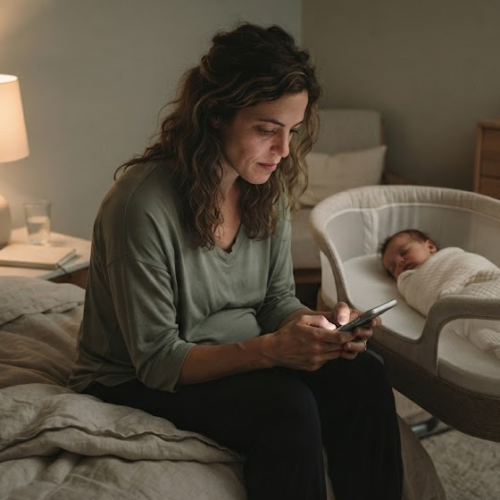
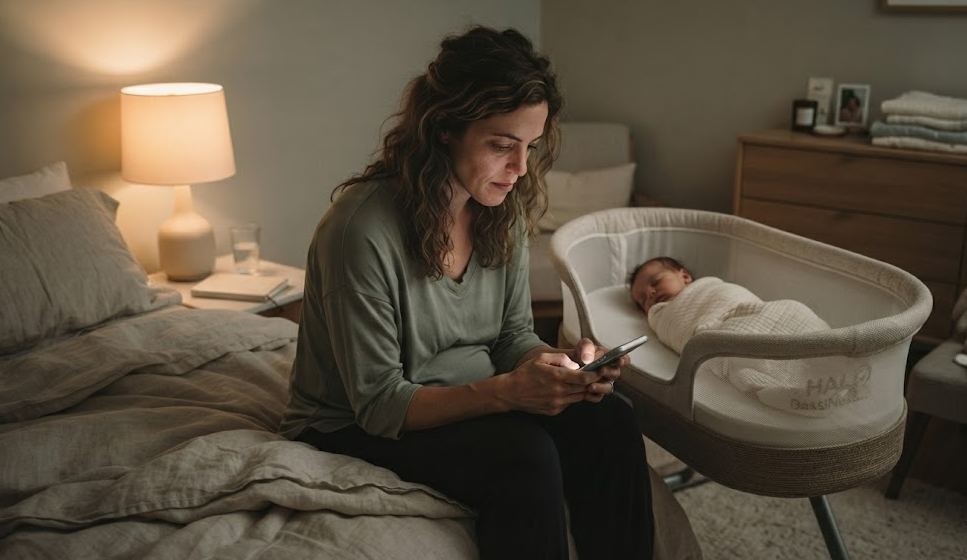
If you’ve opened Facebook, Instagram, or a group chat with other moms this week, you’ve probably seen it: another headline about a “new sleep training study.” Maybe a friend tagged you. Maybe you saw a reel with a very confident voice telling you that everything you thought you knew about cry-it-out is wrong. Maybe you felt that little jolt of anxiety — wait, am I doing this wrong?
Take a breath. You’re not doing it wrong. And this “new” paper, however it’s being framed online, isn’t going to change what actually works for your family tonight.
Let’s talk about what’s really going on.
What the New Research Actually Says
New research from a James Madison University professor is challenging the long-held idea that letting a baby “cry it out” is one of the best ways to build healthy sleep habits.Jennie Rosier, an associate professor at JMU, along with a team of scholars, argues in a new book that infant night waking isn’t a behavioral problem parents need to fix — it’s a normal, developmentally expected part of infancy
Rosier says her own struggles as a mother whose children didn’t sleep through the night, combined with conversations with other moms she respected and admired, pushed her to take a harder look at cry-it-out advice. Sound familiar? It probably does — because almost every parent has been there: exhausted at 3 a.m., googling “is it normal for my baby to still be waking up,” and getting a hundred conflicting answers.
This is the paper making the rounds right now. And on the surface, it sounds like a bombshell. Headlines are framing it as proof that sleep training is “wrong” or “harmful.” But here’s the thing — that’s not actually new information, and it’s not the full picture either.
Why “New” Research Rarely Settles Anything
Here’s something worth knowing before you let any single study reshape your whole parenting approach: infant sleep research has been going back and forth for over a decade, and no single paper ever ends the conversation.
Take the most famous sleep training study often cited by both sides of this debate — a Pediatrics article that followed sleep-trained babies for five years, where parents were guided to either check on their crying infants without picking them up, or to sit nearby without responding, while a control group got no sleep instructions at all.The conclusion? There was no clear harm — but also no clear benefit — to sleep training over time.
That study made headlines for weeks, with plenty of outlets declaring sleep training officially “safe,” and some even recommending it outright to worn-down parents. Now, over a decade later, we have new research swinging the pendulum the other direction, arguing that night waking is normal and shouldn’t be treated like a problem to eliminate.
Notice a pattern? Every few years, a new paper comes out. Every few years, it gets framed as the final word. And every few years, parents are left more anxious than before, wondering which “final word” they’re supposed to be listening to this time.
So What Does This Actually Mean for Your Baby?
Honestly? Not much changes on the ground, and that’s the point of this post.
Here’s what stays true no matter which study is trending this month:
Babies wake up at night. That’s biology, not a parenting failure. Newborns and young infants have small stomachs, immature circadian rhythms, and real developmental reasons to wake — hunger, growth spurts, teething, separation anxiety, illness. No sleep method erases biology.
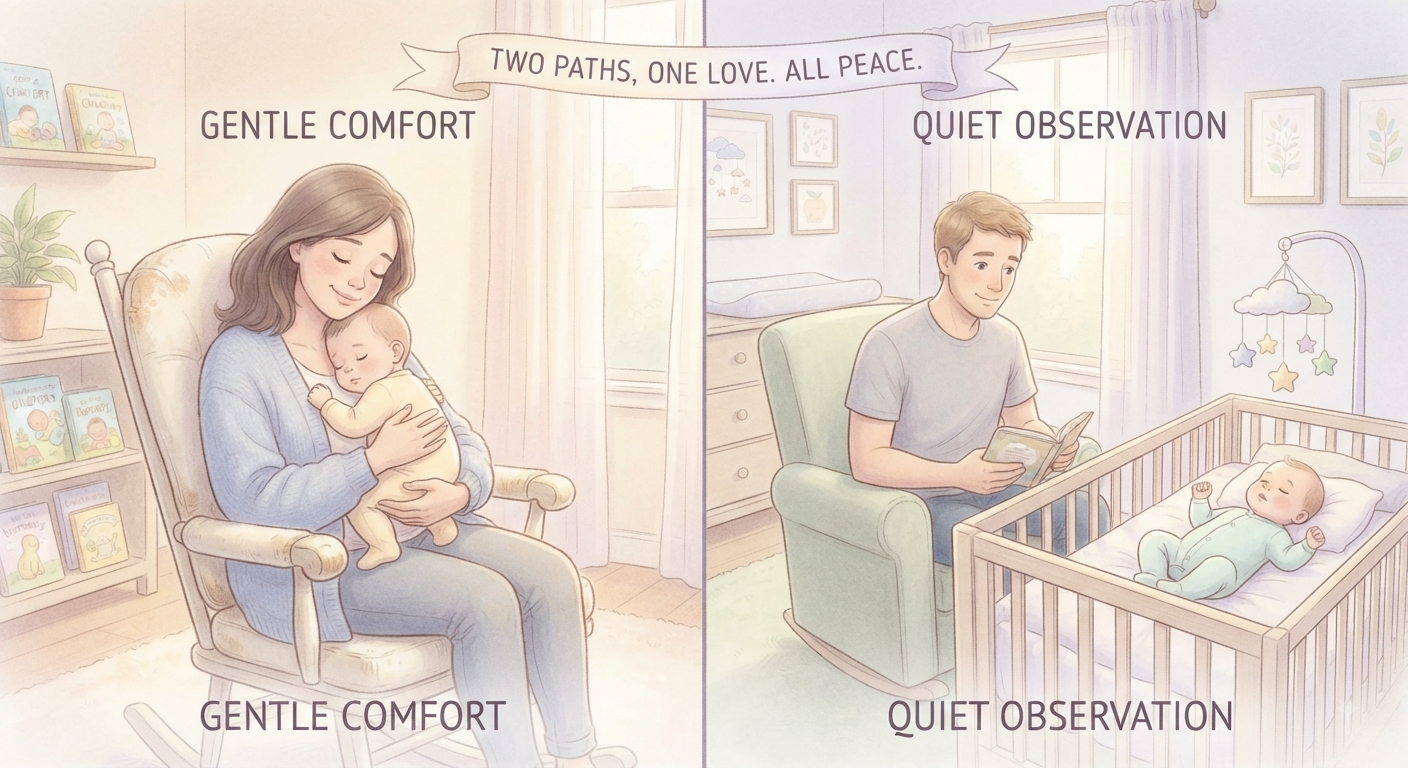
There is no single “right” way that works for every baby or every family. Some babies respond well to structured sleep training methods. Some families can’t tolerate any crying and do better with gentler, responsive approaches. Both can raise securely attached, well-rested-eventually children. The research on outcomes, across years of competing studies, keeps landing in roughly the same place: no strong evidence of long-term harm from gentle sleep training, and no strong evidence that avoiding it produces better-adjusted kids either.
You are allowed to choose based on what your family can actually sustain. Not what a headline says. Not what worked for your sister-in-law. What works when you’re the one awake at 2 a.m.
Why the Headlines Keep Doing This to Us
It’s worth naming what’s actually happening here, because it isn’t really about sleep science — it’s about how research gets translated into parenting content.
A nuanced academic finding (“night waking is developmentally normal and shouldn’t be pathologized”) becomes a much punchier headline (“New Study Proves Sleep Training Is Wrong”). That headline gets clicks. Clicks get shared. Shared posts get algorithm boosts. And somewhere in that chain, the actual nuance — the parts that matter most to you, tonight, with your actual baby — gets left behind.
This isn’t a criticism of the researchers. Work like Rosier’s is genuinely valuable; it pushes back on the idea that a waking baby is a problem that needs fixing, and that reframe can be a real relief for parents who’ve felt like failures for not having a baby who “sleeps through the night” by three months. The issue is what happens to that message by the time it reaches your feed.
What To Actually Do With This Information
If you’re currently sleep training and it’s working for your family — gentle, cry-it-out, some hybrid method, whatever it is — this paper is not a reason to panic or reverse course. Your baby isn’t broken, and neither are you.
If you’ve been resisting sleep training and feeling pressure to do it because “everyone says it works,” this paper might be genuinely reassuring — it’s more evidence that responding to your baby at night isn’t spoiling them or setting them up for failure.
And if you’re exhausted and unsure what to do at all? Here’s the actual, boring, unglamorous truth: talk to your pediatrician about your specific baby, your specific sleep patterns, and your specific limits. Not a headline. Not a comment section. A doctor who knows your child’s history and can help you weigh options that fit your life.
The Bottom Line
New papers will keep coming. Headlines will keep swinging between “cry it out is fine” and “cry it out is harmful.” That cycle isn’t going to stop, because parenting content is an endless news cycle now, and sleep is one of the most universal, most exhausting, most emotionally loaded topics in early parenthood.
But the fundamentals haven’t moved: babies wake at night for real reasons, there’s no universally superior method, and the right choice is the one that’s sustainable for your household — not the one currently trending.
So the next time a friend sends you “the new sleep study everyone’s talking about,” you can read it, nod, maybe feel a little validated either way — and then go back to doing what’s already working for your family. Because that’s the part no paper can actually change.