In this article
- Why Parents Start Questioning Everything
- The Internet Can Answer a Question Without Knowing Your Child
- “Normal” Doesn’t Look Exactly the Same for Every Child
- Sometimes the Real Question Is “Am I a Good Mother?”
- Stop Comparing Your Child’s Childhood With Someone Else’s
- Not Every Difficult Phase Needs to Be Fixed Immediately
- When You Should Stop Googling and Talk to a Professional
- Your Child’s Everyday Life Doesn’t Need to Be Perfect
- You Don’t Have to Be the Mother Who Has Every Answer
- Don’t Forget About the Mother Behind the Question
- The Next Time You Find Yourself Googling at 3 AM
- A Final Note for the Mother Holding Her Phone Tonight
- Frequently Asked Questions
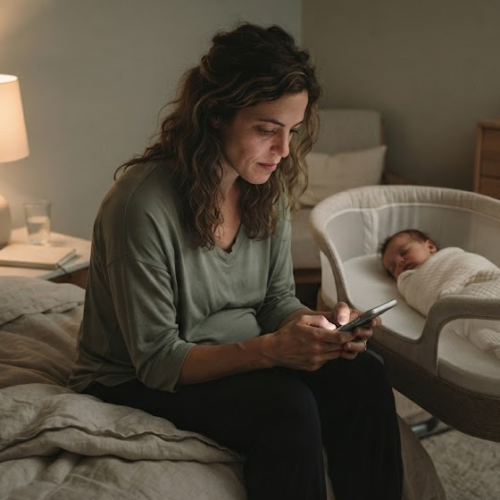
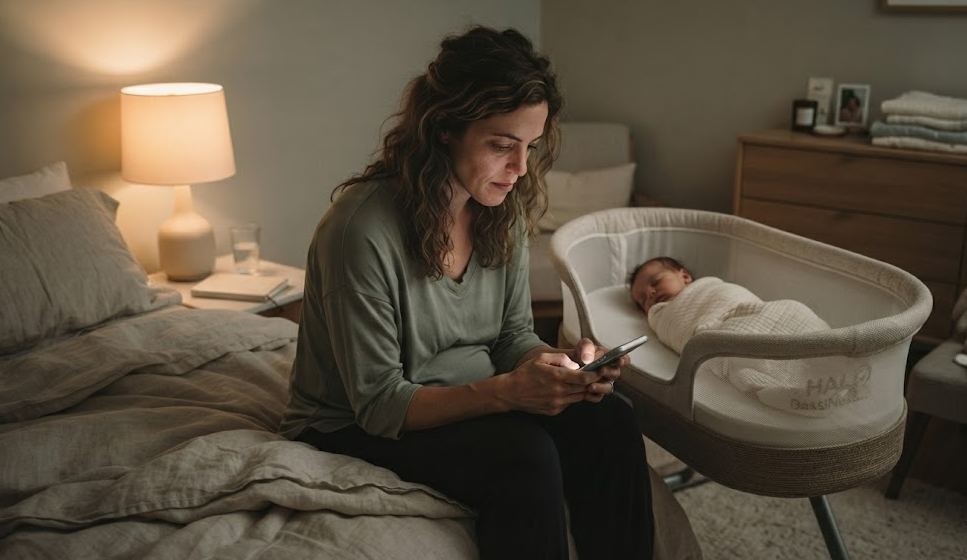
It’s 3:14 in the morning, your child is finally asleep, and instead of resting, you’re staring at your phone. You’ve typed the same question into Google three different ways because you’re hoping that somewhere between the parenting blogs, discussion boards and search results, you’ll find one sentence that makes you feel better: “Yes, this is normal.”
Maybe your baby has suddenly started waking more often. Maybe your toddler has become incredibly picky about food. Perhaps your preschooler has developed a new fear, started having bigger emotional reactions, or seems different from other children their age. During the day, these things might feel manageable. At 3 AM, when you’re exhausted and alone with your thoughts, they can feel much more serious.
This is one of the strange realities of modern parenting. We have more information available than ever before, yet sometimes having endless information makes it harder to know what actually matters. One search can lead to another, and before long, a simple question about your child’s behavior can turn into an exhausting search for every possible explanation.
The important thing to remember is that not every difference is a problem, not every difficult phase needs an immediate solution, and asking for professional advice when you’re concerned is not an admission that you’ve failed.
Parenting is largely about learning your particular child. That takes time, observation, patience and, occasionally, a lot of reassurance.
Why Parents Start Questioning Everything
When you first become a parent, you quickly discover that children don’t come with predictable instructions. Something that worked yesterday may suddenly stop working today. A baby who slept well for several nights might wake repeatedly. A toddler who happily ate a particular meal last week may push the same food away today. A child who normally runs into preschool may suddenly cling to your leg at the door.
Naturally, you start wondering what changed.
The instinct to look for answers comes from a good place. You care about your child and want to make sure you’re giving them what they need. But parenting anxiety can turn that healthy attention into constant comparison. You begin noticing what other children are doing and wondering whether your child should be doing the same thing.
Maybe another baby is sleeping longer. Maybe a friend’s toddler speaks more. Perhaps another child seems more independent, more social or less emotional.
Before long, you’re no longer simply observing your child. You’re measuring them against everyone else.
That can be exhausting because childhood isn’t a competition with a single finish line. Children develop at different rates, have different personalities and respond differently to their environments. Even children growing up in the same family can have completely different temperaments.
The CDC’s milestone resources are designed to help parents understand what most children can do by certain ages, while also encouraging parents to act when they have concerns. They are useful for understanding development, but they shouldn’t become a source of constant comparison or panic.
A child who doesn’t behave exactly like another child isn’t automatically falling behind. Sometimes you’re simply seeing two very different children being themselves.
The Internet Can Answer a Question Without Knowing Your Child
Having reliable information at your fingertips can be incredibly helpful. Parents can learn about developmental milestones, prepare questions for pediatric appointments and find practical ideas for everyday challenges without leaving home.
The problem is that a search result doesn’t know your child.
It doesn’t know whether a behavior happened once or has been happening for months. It doesn’t know your child’s personality, previous development, family circumstances or what is normal for them. It certainly can’t observe your child in the same way a pediatrician can during an appropriate evaluation.
This matters because online information often presents possibilities rather than context. You may search for something completely ordinary, see a long list of potential causes and suddenly start wondering whether every possibility applies to your child.
That’s especially easy to do when you’re tired.
At 3 AM, you’re not necessarily looking for medical information. You may simply be looking for reassurance. Unfortunately, endless searching can sometimes have the opposite effect.
A useful approach is to treat online information as a place to learn and prepare questions, not as a way to diagnose your child.
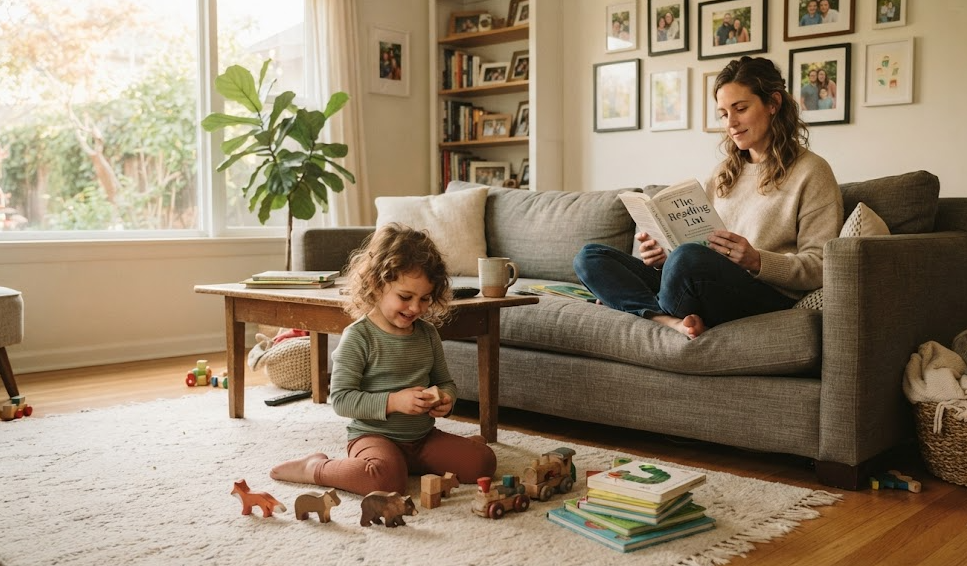
If you notice something that genuinely concerns you, make a note of what you’ve observed. Think about how often it happens, when it started and whether anything else has changed. Then bring those observations to your child’s pediatrician.
The American Academy of Pediatrics recommends ongoing developmental surveillance and emphasizes listening to parents’ concerns as part of that process. When concerns arise, standardized screening or further evaluation may be appropriate.
In other words, you don’t have to figure out the answer before asking for help.
You simply need to notice something and be willing to talk about it.
“Normal” Doesn’t Look Exactly the Same for Every Child
One of the hardest things for parents to accept is that there isn’t always a single picture of normal childhood.
Some children are naturally cautious in unfamiliar places. Others immediately explore everything around them. Some children are adventurous eaters, while others go through long periods when their food preferences are extremely limited. Some love being around other children, while others need time to warm up.
Sleep can be different too. So can communication, play preferences, independence and emotional expression.
This doesn’t mean that every developmental difference should be dismissed. It means that parents should look at the bigger picture instead of judging one isolated behavior.
Think about your child’s overall pattern. Are they continuing to develop new skills? Are they interacting with you and their environment? Have you noticed a significant change from what is typical for them? Is there something that has continued long enough to make you genuinely concerned?
Those questions are often more useful than asking whether your child matches another child perfectly.
Developmental screening itself isn’t a diagnosis. The AAP explains that screening helps identify children who may need closer evaluation, while ongoing developmental surveillance looks at the child’s progress over time and incorporates parent concerns, developmental history and professional observation.
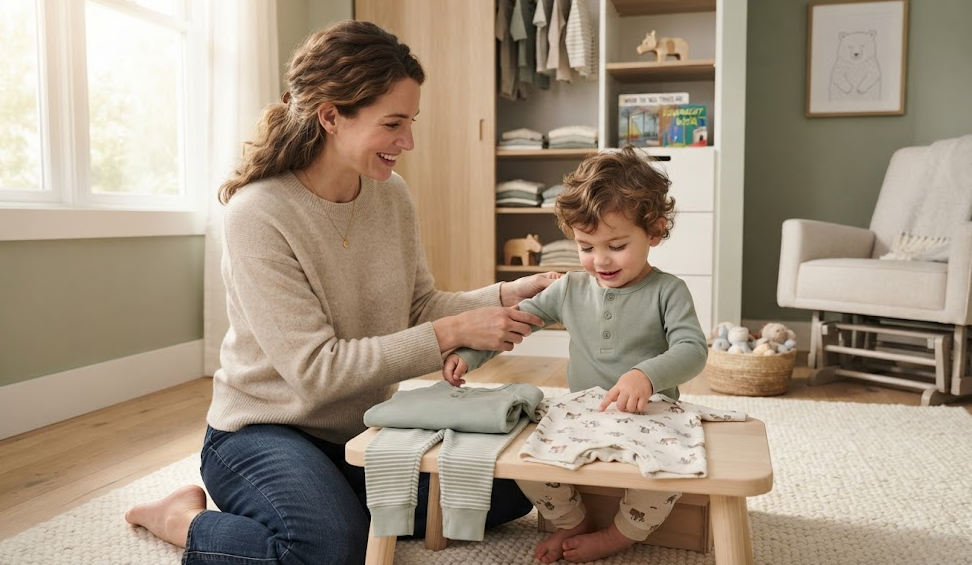
That distinction can be reassuring because it means you don’t have to turn every milestone into a pass-or-fail test.
Your child is a person, not a checklist.
Sometimes the Real Question Is “Am I a Good Mother?”
This is where many late-night parenting searches become emotional.
You may begin by searching, “Why is my toddler refusing dinner?” But after thirty minutes of reading, the question in your head becomes something else entirely:
“Why can’t I handle this?”
You see other parents talking about routines that seem to work perfectly. You see carefully prepared lunches, organized playrooms, educational activities and children wearing adorable coordinated outfits. It can create the impression that everyone else has discovered the secret formula for raising happy, healthy children.
Real family life is much less polished.
There are rushed mornings. There are forgotten snacks. There are meals that nobody wants to eat. There are toys covering the floor and laundry waiting to be folded. There are days when your child wears the same favorite sweatshirt because getting dressed becomes an argument nobody has the energy to have.
There are also days when you simply run out of energy.
None of these things mean you’re failing.
A child’s childhood doesn’t need to be perfectly optimized. They don’t need every afternoon packed with activities, every meal prepared from scratch or every outfit chosen according to the latest trend.
They need connection, care, boundaries, opportunities to explore and adults who make them feel safe.
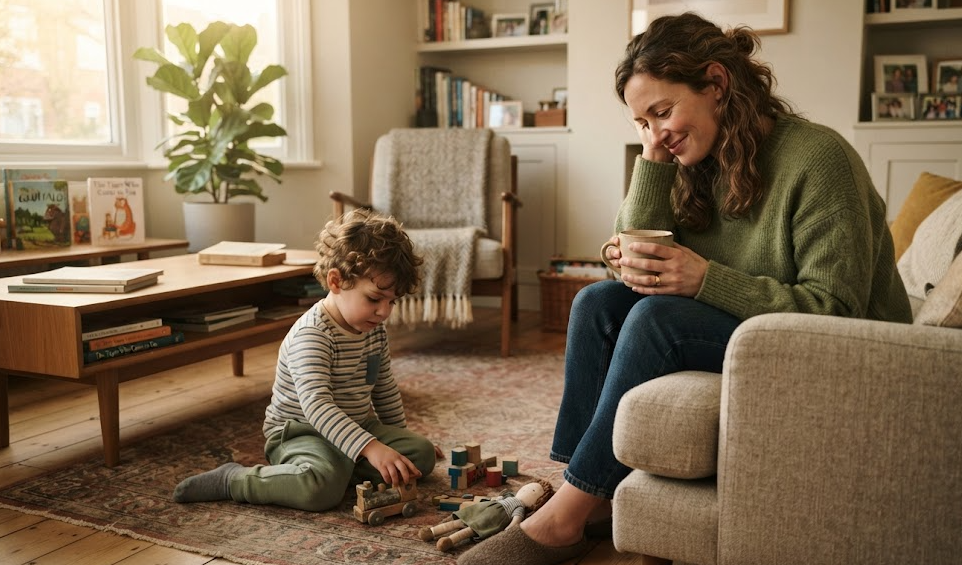
That can happen in a very ordinary home on a very ordinary Tuesday.
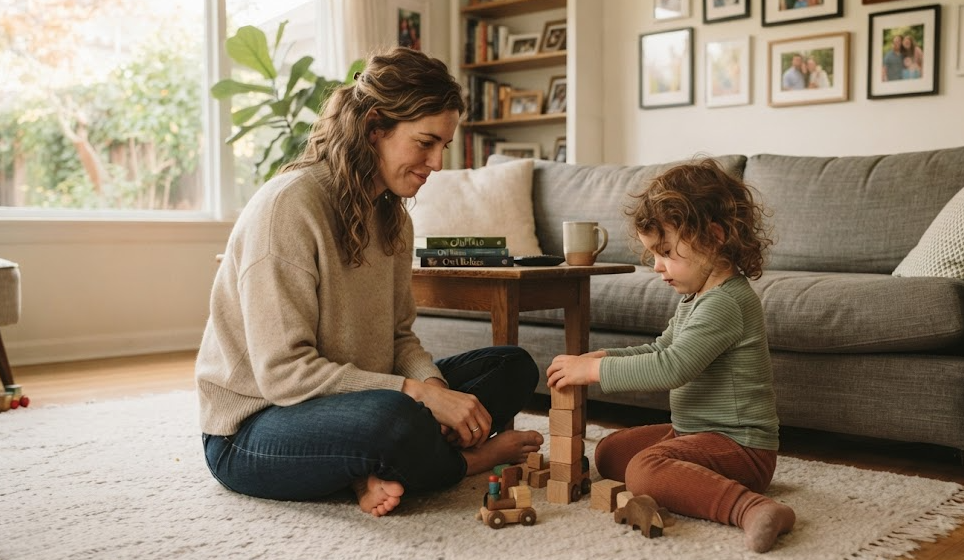
Sometimes the most valuable parenting moments aren’t the impressive ones. They’re sitting on the floor and listening to your child tell you a story that makes absolutely no sense. They’re helping them get dressed for school. They’re reading the same bedtime book for the hundredth time. They’re holding them after a nightmare.
Those moments may never appear in a parenting guide, but they are part of what makes childhood feel secure.
Stop Comparing Your Child’s Childhood With Someone Else’s
Comparison becomes particularly difficult because parents rarely see the complete picture of another family.
You see the child who sleeps through the night, but not the difficult bedtime that happened yesterday.
You hear about the toddler who eats beautifully, but you don’t see the three meals that were refused earlier in the week.
You see the organized playroom, but not the rest of the house.
You see the smiling family photograph, but not the stressful morning that happened before it was taken.
Social media naturally shows selected moments. That’s not necessarily dishonest; it’s simply incomplete.
Your family has an incomplete picture too. You know your own difficult moments in detail because you lived them.
That’s why another parent’s highlight reel can easily feel better than your own behind-the-scenes reality.
Try to bring your attention back to your child.
What are they interested in right now? What makes them feel confident? What situations overwhelm them? What helps them settle? What makes them laugh? What new things have they learned recently?
Those observations tell you much more than whether they look like another child online.
Not Every Difficult Phase Needs to Be Fixed Immediately
Parenting advice can sometimes make it seem as though every challenge needs an immediate strategy.
If your child is picky, you need a feeding technique.
If they don’t sleep, you need a new routine.
If they have tantrums, you need a different discipline method.
If they’re bored, you need another activity.
There are certainly situations where practical strategies can help. But not every difficult period means that your parenting approach is broken.
Children go through phases.
A toddler may become clingy for a while. A preschooler may suddenly become afraid of the dark. A child who previously loved trying new foods may temporarily prefer familiar meals. A baby may experience changes in sleep.
Instead of immediately assuming that something has gone wrong, it can be useful to observe the pattern.
Is this new?
How long has it been happening?

Does it affect other areas of your child’s life?
Is your child otherwise behaving as they usually do?
Are you noticing steady progress over time?
And perhaps most importantly, does something about it genuinely concern you?
If the answer is yes, you don’t need to wait until you understand the problem. That’s exactly when talking with a pediatrician can help.
If the answer is no and you’re simply noticing a temporary change, sometimes giving your child time and keeping their routine reasonably consistent is enough.
When You Should Stop Googling and Talk to a Professional
There is a healthy middle ground between worrying about everything and ignoring genuine concerns.
If you’ve noticed a persistent or significant change in your child’s behavior, communication, development, physical health, sleep or eating, it’s reasonable to discuss it with their pediatrician.
You don’t have to prove that something is wrong.
You don’t need to arrive with a diagnosis.
And you don’t need to feel embarrassed because your concern turns out to be nothing serious.
Parents’ observations are an important part of developmental surveillance. The AAP specifically identifies eliciting parents’ concerns, taking a developmental history and observing the child as components of ongoing developmental surveillance.
That means your question matters.
You can simply say, “I’ve noticed this change and I’m wondering whether we should be concerned.”
Your child’s healthcare provider can then consider the bigger picture and decide whether monitoring, screening, evaluation or reassurance is appropriate.
If you’re ever facing an urgent health or safety situation, seek appropriate medical care rather than relying on an online article.
For everything else, remember that you are allowed to ask questions before you know exactly what the question means.
That’s what healthcare professionals are there for.
Your Child’s Everyday Life Doesn’t Need to Be Perfect
There is another source of pressure that deserves attention: the idea that good parenting means creating a perfect childhood.
Parents are constantly told what children should have.
- More educational toys.
- More activities.
- Better routines.
- More stylish clothes.
- More nutritious meals.
- More books.
- More experiences.
- More everything.
But more isn’t always better.
Children need time to play without being directed. They need downtime. They need opportunities to make small choices and discover their own interests. They need space to simply be children.
The same can be true of the things parents buy.
A child’s wardrobe doesn’t need to contain dozens of complicated outfits. Comfortable, versatile clothes that can survive everyday play may be much more useful to a busy family than something that only looks good for a photograph.
For a children’s store such as LilBabyStore, this everyday perspective is important. Parents aren’t simply shopping for products; they’re looking for things that fit into real family life.
A soft outfit for a busy toddler.
A practical piece for a school day.
Something comfortable enough for play.
Something easy enough for a parent who has already answered fifty questions before breakfast.
Those small conveniences matter because parenting is already demanding enough.
You Don’t Have to Be the Mother Who Has Every Answer
There is an unrealistic expectation that good mothers always know what to do.
But real parenting doesn’t work that way.
- You will make decisions without being completely certain.
- You’ll try something that doesn’t work.
- You’ll change your mind.
- You’ll ask another parent for advice.
- You’ll call your pediatrician.
- You’ll have days when you feel incredibly confident and days when you wonder how anyone knows what they’re doing.
That’s normal too.
Good parenting isn’t about never making mistakes. It’s about being willing to notice when something isn’t working and respond.
- Maybe your child’s bedtime routine needs to change.
- Maybe they need more independence.
- Maybe they need more reassurance.
- Maybe you need more support.
- Maybe you’ve simply reached the point where you’re tired enough that everything feels harder.
None of those situations require shame.
They require attention.
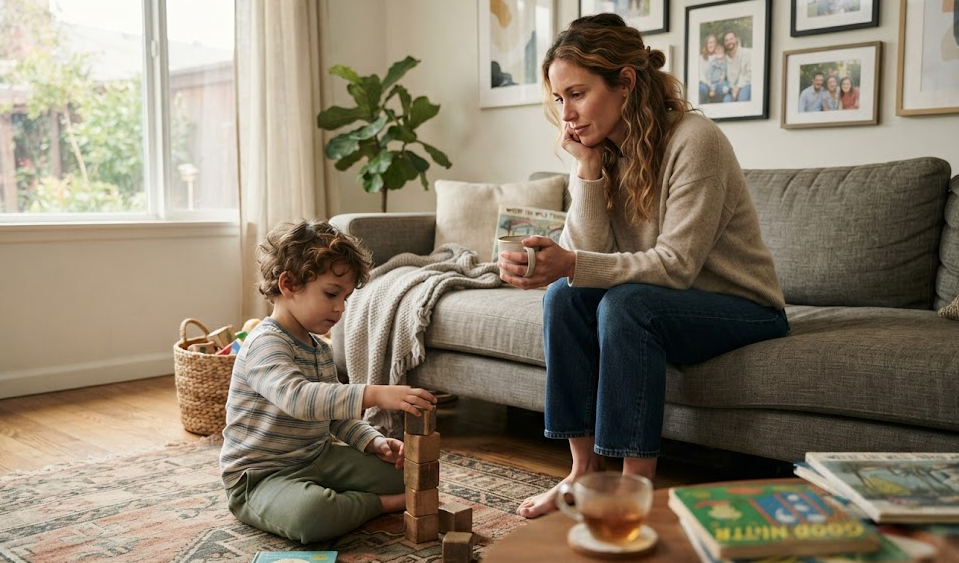
And sometimes, they require a little help.
Don’t Forget About the Mother Behind the Question
If you’re constantly searching for answers because you feel overwhelmed, your wellbeing deserves attention too.
Parenting can be physically and emotionally demanding, especially when you’re not getting enough sleep. When you’re exhausted, even ordinary challenges can feel enormous.
If possible, share some of the practical responsibilities with a partner, family member or trusted friend. Take a break when you can. Give yourself permission to have an evening where the house isn’t perfectly clean and nothing productive happens.
And if anxiety, sadness or feelings of being overwhelmed become persistent or begin interfering with your everyday life, consider speaking with your own healthcare professional.
Looking after yourself isn’t separate from looking after your family.
You’re part of the family too.
The Next Time You Find Yourself Googling at 3 AM
The next time you’re awake in the middle of the night wondering whether your child’s behavior is normal, pause before you start scrolling.
Ask yourself whether you’re looking for information or reassurance.
If you’ve noticed a genuine and persistent concern, write down what you’ve observed and make a plan to discuss it with your child’s pediatrician.
If you’re simply seeing a temporary change, remember that children are constantly developing and their behavior can change along the way.
If you’re comparing your child with another family, step away from the comparison and look at your child’s individual progress.
And if you’re exhausted, give yourself permission to admit that you’re exhausted.
You don’t need to solve every parenting question before sunrise.
- Some questions can wait until morning.
- Some answers will come from experience.
- Some will come from your pediatrician.
And some questions may eventually disappear on their own as your child moves into the next stage.
A Final Note for the Mother Holding Her Phone Tonight
Maybe you’re reading this at 3 AM because your baby woke up again.
Maybe your toddler is going through a phase you don’t understand.
Maybe you’ve been comparing your child with other children and wondering whether you’re doing enough.
Or maybe you’re simply exhausted and looking for someone to tell you that you’re not alone.
You aren’t.
Parenting is full of uncertainty. There will always be another stage, another question and another moment when you wonder whether you’re getting it right.
- You don’t have to know everything.
- You don’t have to follow every parenting trend.
- You don’t have to create a perfect routine.
- You don’t have to buy everything another parent recommends.
- You don’t have to make every day educational.
- You just need to pay attention to your child, respond with care and ask for help when something concerns you.
And when you make a mistake, you can repair it and try again.
That’s what real parenting looks like.
So the next time you’re tempted to type “Is it normal?” into Google at 3 AM, remember that the question itself doesn’t mean you’re failing.
It means you’re paying attention.
And if you genuinely need an answer, there are people who can help you find it.
But if you’ve already checked what you needed to check and your child is sleeping safely beside you, perhaps tonight you don’t need another search.
Perhaps you need rest.
Because tomorrow morning, your child will wake up, the day will begin again, and you’ll continue doing what you’ve been doing all along: learning your child, one ordinary day at a time.
Frequently Asked Questions
Is it normal for children to develop at different rates?
Yes. Children don’t all develop skills at exactly the same time. Developmental milestones provide useful guidance, but individual children can have different patterns of development. If you’re concerned about your child’s progress, discuss your observations with their healthcare provider.
Should parents use Google to check their child’s symptoms?
Online information can help parents understand general topics and prepare questions, but it cannot replace personalized medical advice. If you’re concerned about your child’s health or development, speaking with an appropriate healthcare professional is a better next step.
When should I talk to my child’s pediatrician?
Consider contacting your child’s pediatrician when you notice a persistent or significant change in health, behavior, communication or development, or whenever something continues to concern you. You don’t need to know what’s causing the problem before asking for guidance.
How can parents stop comparing their children with others?
Focus on your child’s individual progress, personality and needs instead of using another child’s development as the standard. Social media and casual conversations also rarely show the complete reality of another family.
Does every parenting problem need to be fixed?
Not necessarily. Some challenges are temporary phases that change as children grow. However, persistent concerns or significant changes should be discussed with a qualified healthcare professional rather than simply ignored.
Is it okay to choose simple children’s products and clothing?
Absolutely. Children’s everyday products should be practical, comfortable and appropriate for the child’s needs. Parents don’t need to follow every trend or purchase more than their family genuinely needs.