In this article
- The Pressure to Parent the “Right” Way
- Different Children Need Different Approaches
- The Hardest Part Is Often the Doubt
- You Don’t Have to Defend Every Parenting Choice
- Your Child Doesn’t Need a Childhood Designed for Comparison
- A Simpler Childhood Can Still Be a Rich Childhood
- Parenting Against the Grain Doesn’t Mean Rejecting Expert Advice
- Your Parenting Style Can Change
- There Will Be Days When You Wonder If You’re Doing It Wrong
- What Really Matters in the Long Run?
- You Don’t Need Everyone to Agree With You
- Final Thoughts
Parenting has never come with a single instruction manual, yet modern parents are surrounded by endless advice about what they should be doing. From sleep routines and screen time to children’s activities, clothing, toys and education, there always seems to be a new “right” way to raise a child. Social media has made this even more complicated. One family appears to have the perfect routine, another has an incredibly organized playroom, and someone else seems to have discovered the ideal approach to every stage of childhood.
It can make you wonder whether you are doing enough.
The truth is that parenting against the grain is rarely about deliberately doing the opposite of everyone else. More often, it means stepping back from the noise and deciding what genuinely works for your child and your family. It may mean choosing a slower schedule, allowing more time for unstructured play, buying fewer but more practical children’s products, setting different boundaries around technology, or simply refusing to turn every part of childhood into a competition.
And while making those choices can be relatively easy, standing by them when other people question you can be much harder.
That is often the real challenge of parenting differently: learning to trust your judgment without feeling the need to prove it to everyone else.
The Pressure to Parent the “Right” Way
Today’s parents have access to more information than ever before. That can be incredibly useful, but it can also become overwhelming. A simple question about your child’s bedtime can lead to hundreds of opinions. A search for toddler activities can produce endless lists of classes, toys and educational programs. Even something as ordinary as choosing children’s clothing can turn into a discussion about trends, brands, materials and what other families are buying.

There is nothing wrong with learning from other parents or professionals. The problem begins when information turns into pressure.
You may see a parent online talking about their child’s carefully structured daily routine and start wondering whether your own child needs more activities. You might see beautifully styled photographs of children’s rooms and suddenly feel that your child’s play space isn’t good enough. You might hear another parent talk about their child’s achievements and begin comparing your child’s development with theirs.
But you are rarely seeing the whole story.
Social media shows selected moments. It doesn’t show the argument that happened before the photograph, the toys scattered across the room afterward, the dinner that a child refused to eat or the parent who spent half the night worrying about whether they were getting everything right.
Parenting is much messier and more ordinary than the internet often makes it appear.
That is why one of the healthiest things a parent can do is stop asking, “What is everyone else doing?” and start asking, “What does my child actually need?”
Different Children Need Different Approaches
One reason parenting advice can become confusing is that children themselves are incredibly different. What works beautifully for one child may create unnecessary stress for another.
Some children love busy schedules. They enjoy sports, music lessons, playdates and group activities and seem to thrive when they have somewhere to go every afternoon. Other children become tired and overwhelmed when their days are constantly structured and may benefit from more quiet time at home.
The same is true of routines. Some children feel secure when their day follows a predictable pattern, while others are naturally more flexible. Some children love choosing their own clothes and feel proud when they can express their personality through what they wear. Others are perfectly happy when a parent chooses their outfits.
There is no contradiction in these differences. Childhood isn’t a standardized experience.
This is especially important when it comes to the products parents buy for their children. A child’s wardrobe doesn’t need to resemble a miniature fashion collection simply because social media makes certain styles popular. For many families, comfortable, versatile and easy-to-wear clothing is far more useful for everyday life than having a closet full of outfits that rarely get worn.
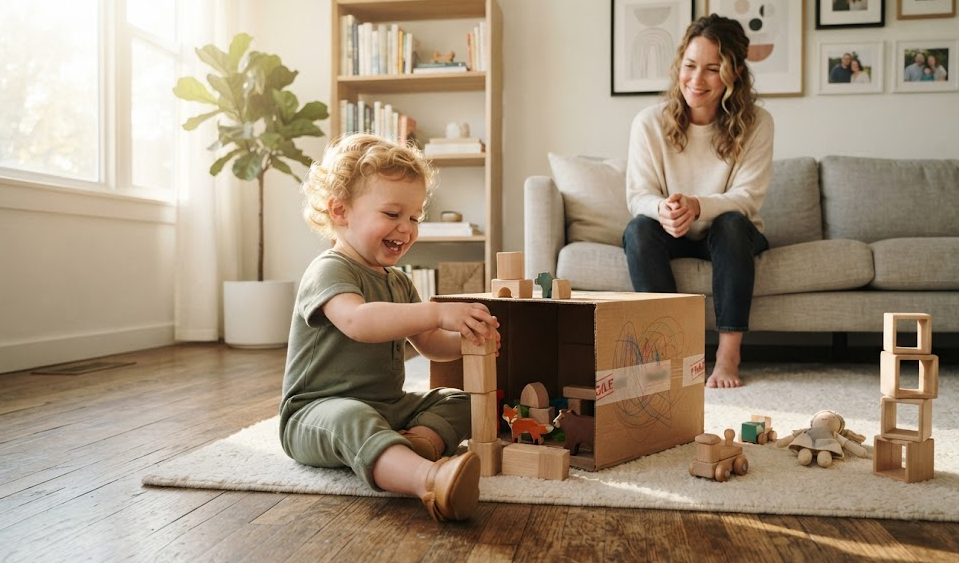
The same principle can apply to toys and children’s accessories. More isn’t automatically better. Parents can focus on products that fit their child’s age, lifestyle and genuine needs rather than feeling pressured to purchase every new trend.
For a family shopping for children’s essentials, this approach can make everyday parenting feel a little simpler: choose thoughtfully instead of constantly trying to keep up.
The Hardest Part Is Often the Doubt
When you choose a different approach, the biggest challenge may happen inside your own head.
You might decide not to fill your child’s schedule with activities, then wonder if you’re holding them back. You might decide that your family needs less screen time and worry that your child is missing out. You might prefer simple toys and wonder if you should be buying more educational products. You might choose comfortable everyday clothing over constantly following children’s fashion trends and wonder whether you’re doing enough to encourage your child’s individuality.
These questions don’t necessarily mean you’ve made the wrong decision. They often mean you care deeply about getting it right.
Parenting naturally comes with uncertainty because there are very few decisions that come with guaranteed outcomes. You can make thoughtful choices, pay attention to your child and still have moments when you aren’t sure what to do.
That is normal.
Instead of looking for absolute certainty, it can be more useful to look for evidence in your own family. Is your child generally getting enough rest? Do they have opportunities to play? Are they developing age-appropriate independence? Do they feel comfortable talking to you? Are the boundaries in your home reasonably consistent? Does your routine leave enough space for connection and relaxation?
These questions tell you much more about your family’s well-being than whether your parenting looks similar to someone else’s.
You Don’t Have to Defend Every Parenting Choice
One of the uncomfortable parts of doing things differently is that other people may have opinions.
Grandparents may suggest a different approach. Friends may question your routines. Another parent at school may casually suggest that your child should be doing more. Even strangers online can be surprisingly confident about what they think another family should be doing.

You don’t have to turn every disagreement into a debate.
Sometimes a simple “This is what works for us right now” is enough.
That doesn’t mean ignoring useful feedback. If a trusted teacher notices something concerning, it is worth listening. If your pediatrician recommends a change for your child’s health, that deserves serious consideration. If someone you respect offers an observation you hadn’t considered, you can think about it without feeling obligated to follow it.
Being confident doesn’t mean believing you are always right.
It means being comfortable enough to consider another perspective without immediately assuming that your own approach must be wrong.
Your Child Doesn’t Need a Childhood Designed for Comparison
Comparison can quietly change the way parents experience childhood.
Instead of enjoying what your child is doing, you start watching for where they stand in relation to everyone else.
Is their reading level ahead?
Are they doing enough activities?
Are they social enough?
Are they athletic enough?
Do they have enough friends?
Are they wearing the right clothes?
Does their bedroom look good enough?
There is always another category in which someone else’s child appears to be ahead.
But children are not supposed to develop according to a competition scoreboard.
A child’s interests, personality and abilities will change over time. One child may be fascinated by dinosaurs while another loves drawing. One may spend hours building elaborate structures while another wants to run outside all afternoon.
Instead of constantly asking whether your child is ahead or behind, pay attention to who they are becoming.
What makes them curious? What makes them laugh? What challenges them? Where are they becoming more independent? What makes them feel confident?
Those observations create a much more meaningful picture of childhood.
A Simpler Childhood Can Still Be a Rich Childhood
There is sometimes a misconception that choosing a simpler parenting approach means giving children less.
In reality, simplifying childhood can create more space for experiences that don’t require expensive products or elaborate planning.
A child can spend an afternoon building a blanket fort, drawing with crayons, helping prepare dinner, riding a bike, looking at books or playing pretend. None of these activities need to be turned into a lesson to have value.
Children also need downtime.
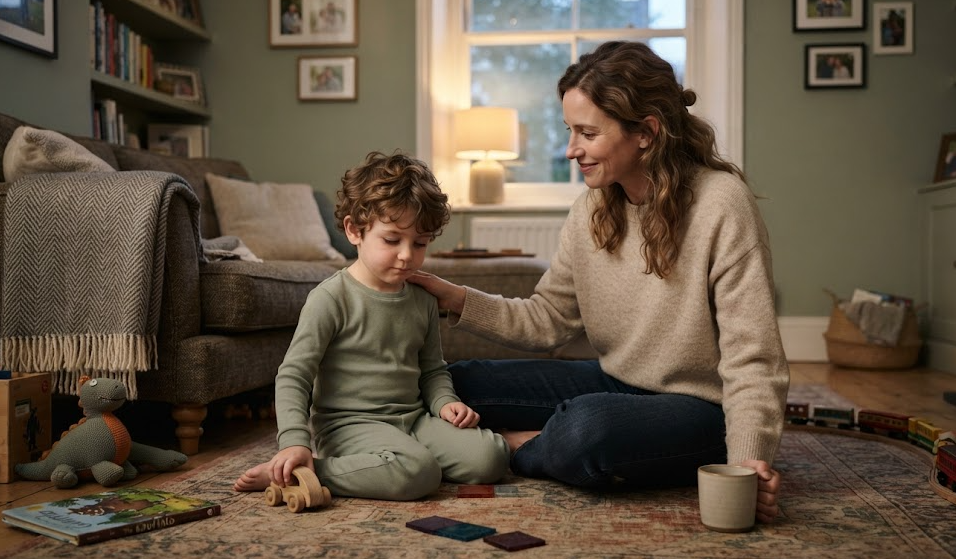
When every afternoon is filled with structured activities, there may be less opportunity for children to decide what they want to do. Unstructured play gives them room to experiment, create their own games and solve small problems independently.
The same philosophy can apply to the physical things around them. A practical children’s wardrobe, a few favorite toys and a comfortable home environment can provide everything a child needs for everyday life without creating constant pressure to buy more.
For parents, this can be liberating. You don’t have to keep purchasing something new to create a meaningful childhood.
Sometimes children need time more than things.
Parenting Against the Grain Doesn’t Mean Rejecting Expert Advice
There is an important difference between thoughtful parenting and deliberately rejecting conventional advice.
Choosing a different path does not mean ignoring pediatric guidance, child development research or professional recommendations. In fact, good parenting involves being willing to learn and change.
The difference is that you don’t have to accept every trend as a rule.
If someone says every child should follow exactly the same routine, you can ask whether that makes sense for your child’s age and temperament. If a social media post claims that a particular product is essential for every baby, you can consider whether your child actually needs it. If another parent insists that their method is the only method that works, you can listen without automatically adopting it.
Reliable information should help you make better decisions.
It shouldn’t make you feel guilty for making a different decision.
For questions involving your child’s health, development or safety, professional advice from an appropriately qualified healthcare provider should always take priority over social media opinions or parenting trends.
Your Parenting Style Can Change
Another reason parents sometimes feel trapped by parenting philosophies is the belief that they have to choose one approach and stick with it forever.
You don’t.
A strategy that works for a two-year-old may not work for a six-year-old. A routine that works during the summer may need to change when school begins. A family that once had plenty of free afternoons may become busier later.
Children change.
Families change.
Parents change.
Changing your approach isn’t a failure. It is often evidence that you are paying attention.
Perhaps your child suddenly becomes interested in sports and wants to join a team. Perhaps they become more independent and want greater control over their clothing. Perhaps your family realizes that the current bedtime routine isn’t working and needs to be adjusted.
You can make changes without abandoning your values.
The goal isn’t consistency for its own sake.
The goal is responsiveness.
There Will Be Days When You Wonder If You’re Doing It Wrong
Even parents who are comfortable with their choices have difficult days.
Your child may have a meltdown in the middle of a grocery store. They may refuse to get dressed for school. They may suddenly reject a routine that worked perfectly for months. You may lose your patience and feel guilty afterward.
One difficult day doesn’t mean your parenting philosophy has failed.
Families are not laboratories where every variable can be controlled. Children have moods, preferences and unexpected reactions. Parents have stress, fatigue and their own emotions.
What matters is how you respond over time.
If you make a mistake, repair it. If something isn’t working, reconsider it. If your child needs more support, give it to them. If you need help, ask for it.
Children don’t need parents who never make mistakes.
They need parents who demonstrate that mistakes can be acknowledged, repaired and learned from.
What Really Matters in the Long Run?
When the noise of parenting trends is stripped away, the fundamentals are surprisingly simple.
Children need to feel loved and secure. They need boundaries that make sense for their age. They need opportunities to explore and develop independence. They need time to play, rest and connect with people who care about them.
They also need parents who are willing to see them as individuals.
That may mean recognizing that your child doesn’t enjoy the same activities as their friends. It may mean understanding that your toddler needs more time during transitions. It may mean choosing comfortable clothing because your child is constantly moving and playing rather than buying something simply because it photographs well.

These aren’t necessarily dramatic parenting decisions.
Most of the time, parenting against the grain looks very ordinary.
It looks like saying no to another scheduled activity because your child needs an afternoon at home.
It looks like choosing a practical outfit instead of an impractical trend.
It looks like sitting on the floor and playing instead of finding another activity to keep your child busy.
It looks like letting your child be bored long enough to discover something interesting.
It looks like trusting that childhood doesn’t have to be optimized every minute.
You Don’t Need Everyone to Agree With You
Perhaps the most difficult part of parenting differently is accepting that some people will never agree with your choices.
That’s okay.
Your family doesn’t need unanimous approval from relatives, neighbors, other parents or strangers on the internet.
What you need is enough confidence to make thoughtful decisions, enough humility to reconsider them when necessary and enough flexibility to adapt as your child grows.
Parenting isn’t about proving that your way is better than someone else’s.
It is about understanding that their family is not your family, and your child is not their child.
What works beautifully for another parent may be completely wrong for your circumstances. And something that looks unusual to someone else may be exactly what your family needs.
Final Thoughts
The hardest part about parenting against the grain isn’t always making a different choice.
It’s trusting that choice when everyone around you seems to be doing something else.
There will always be another parenting trend, another comparison and another person who believes they know the answer. You don’t have to follow all of them.
Learn from reliable sources. Listen to people you trust. Pay attention to your child. Ask for professional guidance when you need it. And don’t be afraid to change your approach when circumstances change.
Most importantly, remember that your family doesn’t have to look perfect to be doing well.
Your child doesn’t need the most expensive toys, the busiest schedule or the trendiest wardrobe. They need room to grow, opportunities to explore, people who listen and a home where they feel secure enough to be themselves.
Sometimes, parenting against the grain simply means choosing what makes sense for your family instead of what looks impressive to everyone else.
And that may be one of the most confident parenting decisions you can make.